
Responsible materials
A broad choice of responsibly sourced and lower-impact paper and media options.
One team. Print made properly.
Make what is needed. Waste less.
Practical choices that reduce impact without pretending print has no footprint.
Ethos & responsible business
We focus on actions we can evidence: sensible run lengths, responsible papers, local recycling, lower-waste workflows and products selected for the life they genuinely need.
Tell us which environmental priorities matter to your organisation. We will discuss materials, run length, finish, lifespan and distribution without making claims the job cannot support.
Discuss a lower-impact route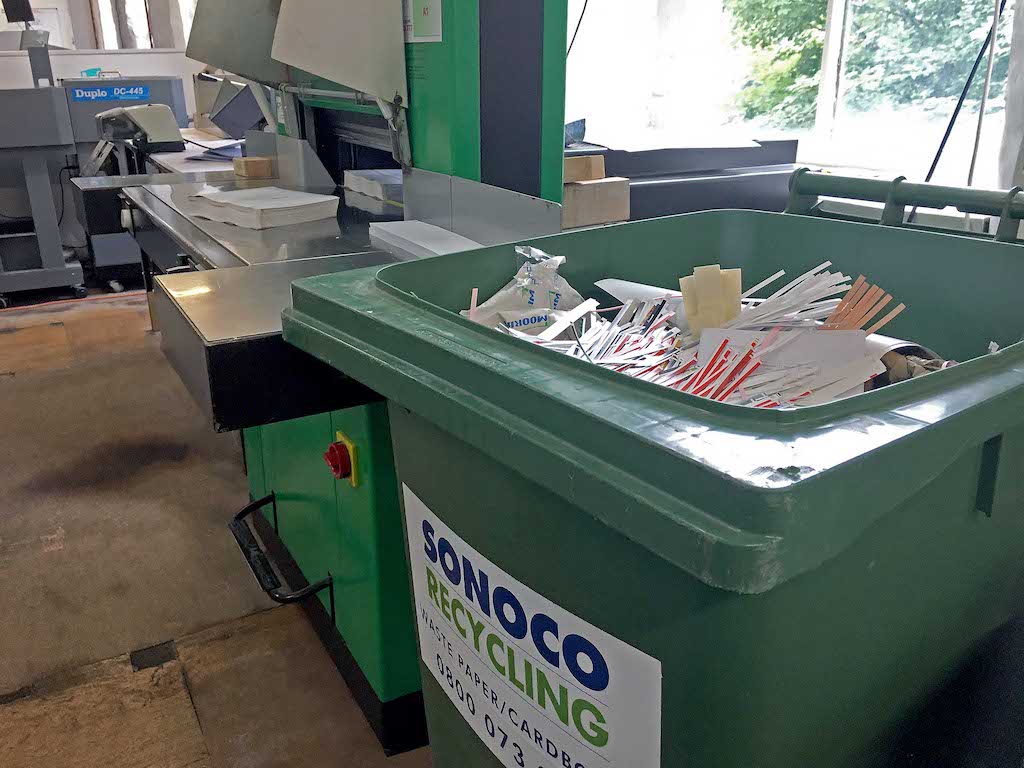
What matters
Impact is shaped by a chain of choices, from the first specification to what happens when the piece is no longer needed.
A broad choice of responsibly sourced and lower-impact paper and media options.
Waste paper is collected locally and returned to useful material streams.
Short and targeted runs reduce obsolete stock and unnecessary distribution.
Practical measures
Print has an environmental footprint, so our approach is to understand it, reduce avoidable impact and offer credible alternatives where the brief allows. We keep reviewing materials and working methods rather than treating one label as the complete answer.
Responsibly sourced paper options, soy-ink products and carbon-balancing routes for suitable larger jobs.
Waste paper is recycled locally, travelling less than ten miles before being turned into cardboard tubes.
Boxes and protective packaging are reused where practical to reduce demand for virgin material.
Suitable equipment is maintained and refurbished to extend useful life rather than replaced unnecessarily.
Hard-wearing stocks and formats can sometimes avoid lamination or encapsulation altogether.
Short, focused production helps prevent excess stock becoming waste before it is ever used.
Everyday studio choices
We pay attention to the everyday details too: reusing materials, choosing wooden pencils and recycled-plastic pens, offering compostable paper cups and supporting Printers Against Plastic.
When a better method or material becomes available, we assess whether it can improve the result and reduce impact without making claims the finished product cannot support.